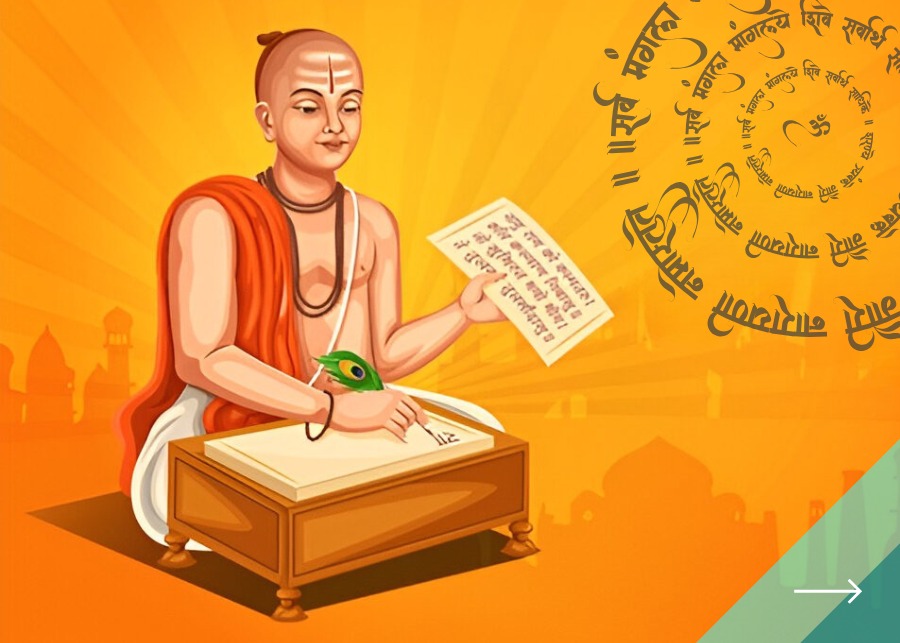
We all know Freud as the Father of Psychoanalysis.
But did you know Bharata psychoanalysed his audience’s minds almost 20 centuries before Freud?
We all know Freud as the Father of Psychoanalysis.
But did you know Bharata psychoanalysed his audience’s minds almost 20 centuries before Freud?
As Bharata himself says:
“त्रैलोक्यास्यास्य सर्वस्य नाट्यं भावानुकीर्तनम् ॥” (NS 1.107)
Natya is the re-expression or portrayal of the emotions found in the realm of the threefold world.
Sounds heavy, doesn’t it? What he’s really saying is:
Natya is nothing but a reflection of the world.
Drama as Psychoanalysis
One aspect of Natyashastra that I connect deeply with is Bharata’s rules for writing a drama.
I say he “psychoanalysed” his audience long before psychology was even a term, because of the sheer depth of thought he put into explaining its impact.
- Firstly, He emphasised that drama is an audio-visual medium (दृक्-श्राव्य) and therefore more powerful than poetry, which appeals only to the ear.
- In poetry, the poet says “he was angry/sad/happy,” but the listener interprets those emotions through their own imagination and experiences. For one who has lived with much anger, anger looks very different than for someone who hasn’t.
- In drama, however, the playwright has the power to direct and shape exactly what the audience feels, and in what intensity.
👉 Isn’t that profound?
Before reading Sanskrit dramas and writing ‘reference to contexts’ in our literature papers, I had never thought of this with such keen attention.
And taking this thought a little further-don’t you think the movies and series we see now, have even more influential power, thanks to background music, visuals, cinematography, etc.?
No wonder they influence us so strongly.
We become what we consume-not just food, but also content.
And Bharata realized this centuries ago.
Rules to Protect the Audience
Just as today we have a Censor Board, Bharata laid down clear dos and don’ts for playwrights.
1. No Negative Visuals
He strictly forbids depicting any scenes that can cause a negative impact in the viewers’ minds-like killings, deaths, curses, etc.
These can be narrated in the plot, but shouldn’t be shown on stage.
Why? Because visuals leave a lasting impact, while narration leaves space for imagination.
2. The Protagonist Must Be Noble-and Survive
Bharata was an advocate of happy endings. He clearly states that the protagonist should not die in the plot.
- From the audience’s perspective: we emotionally connect with the lead’s journey, and of course we do not want them dead.
- From the playwright’s perspective: if after enduring so much the hero still perishes, what message does it leave?
Dramas should inspire the majority to try, not frighten them away.
The Happy Ending Principle
One major factor that shapes Bharata’s theory is that:
All dramas are supposed to have happy endings.
Why?
Because people come to drama to relax, to disconnect, to learn, to feel uplifted.
Real life already has enough struggle.
Art must offer solace, hope, and faith in life.
For Bharata, drama was not just entertainment. It was a tool to: educate, inspire, counsel, motivate, delight, and strengthen the society. To encourage people to believe in what seems impossible, to enkindle hope and reinforce faith.
To convince them that everything happens for a reason, to boost their self-confidence, to help them forget their worries, and to believe in happiness.
To inspire them to lead a worthwhile life and add value to the world.
Bharata: The Original Psychoanalyst
To me, Bharata wasn’t merely writing rules for playwrights. His vision was far beyond that.
He was building strong mindsets through characters.
He didn’t just understand individual thought processes-he contemplated the collective psyche of humankind.
And he didn’t stop there; he laid the foundation to influence it profoundly through the beautiful medium of Natya. Perhaps we’ve praised Freud enough.
Maybe it’s time we give Bharata his due-and apply his timeless principles to script happier, more meaningful lives of our own!