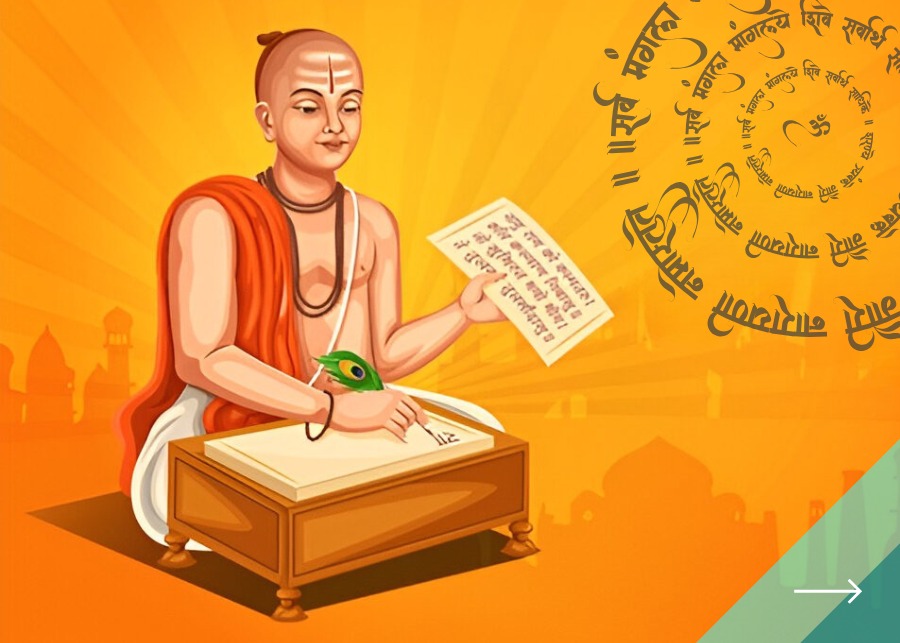
Beyond the Arthashastra: Kautilya as a Teacher
Kautilya or Chanakya, the author of Arthashastra, is widely known as the diligent king-maker and eminent administrator of all times. Not just in Sanskrit literature, but in world history itself, he is recognized for his expertise in establishing the great Mauryan empire. Shrewd politics, intricate understanding of human nature, sharp sense of justice, and strategic planning are the attributes that Chanakya or Kautilya is well-known for.
However, one amongst his many brilliant qualities is his dedication to his profession. And what was his profession? Minister? Strategic planner? Advisor? Well, if you look closely – being a teacher.
The Visionary Teacher Behind the Mauryan Empire
We all know the historic story of how Kautilya and Chandragupta overthrew the Nanda dynasty and established the Mauryan rule. Not just that, but later expanded the kingdom aggressively and powerfully, yet gracefully ruled it. This mighty duo was also well prepared to resist the attacks from Alexander.
However, even after all these achievements, Kautilya chose to retreat to Takshashila and continue teaching there for the rest of his life – leaving behind the tons of wealth and status that he and his disciple had effortfully amassed.
The true glory of a teacher shines through his students. And so does Kautilya’s. The evidently powerful and just rule of Chandragupta dictates the fact that Kautilya was not just insightful at strategy building but was also a futuristic and responsible teacher.
Arthashastra as a Teacher’s Vision
Not much of their personal stories are available, except for some references from classical literature, and the Arthashastra itself. Yet these are enough proofs of his greatness as a teacher.
Arthashastra mirrors his vision, insight, and impeccable administrative teachings. Apart from these, it also highlights how he holds a king’s responsibility to serve the kingdom and welfare of the subjects in high regard.
He very clearly lays down the training procedure of the king; and by that he means not just physical training and training in warfare and administration, but also training for being a responsible human being. I personally found this very intriguing.
Training Beyond Knowledge
Kautilya mentions chapters on what knowledge is to be studied by a king. But along with that, he also mentions chapters like Indriyajayaḥ and Vṛddhasaṃyogaḥ.
- Indriyajayaḥ talks about the control over senses and sensual pleasures. According to Kautilya, a king must master his senses before taking up the responsibility of the kingdom.
- Vṛddhasaṃyogaḥ further entails that the king – or let’s say the potential king – should spend time with elders and experts.
Only learning the theories and shastras is not prescribed by Kautilya. He enjoins these learnings with the experiences of the wise from specific fields.
This is just the tip of the iceberg. His teachings go far deeper. But this is the point where they begin – from the very roots of how the king should be developed as a person first and then a king.
Writing the Arthashastra: A Teacher’s Risk
Writing Arthashastra itself is the biggest sign of Kautilya being a teacher at the core. It mentions all possible ways to build a successful kingdom and deal with enemies. Thus, writing it down meant serving all the inside secrets to enemies and potential rivals on a platter.
However, his deep belief in his teachings and confidence in the Mauryan kings’ capabilities left no room for hesitation before spilling these secrets to the world. Arthashastra quite literally acts as a manual to building an empire.
And this is what Kautilya was interested in teaching – not just his immediate students, but people and generations to come.
Kautilya’s Legacy as a Teacher
His teachings empower not just kings but also any person in an authority or leadership position, however small or big. A king is someone who has the responsibility of more than just his life and livelihood.
By this logic, Arthashastra principles apply to many: businesspersons, leaders, even householders, and so on. Thus, by compiling his teachings in Arthashastra, Kautilya has not just authored an intellectual treatise, but also paved the way for future generations to understand and take up the responsibility of leadership roles.