Blogs

Before Freud, There Was Bharata

Before Freud, There Was Bharata…

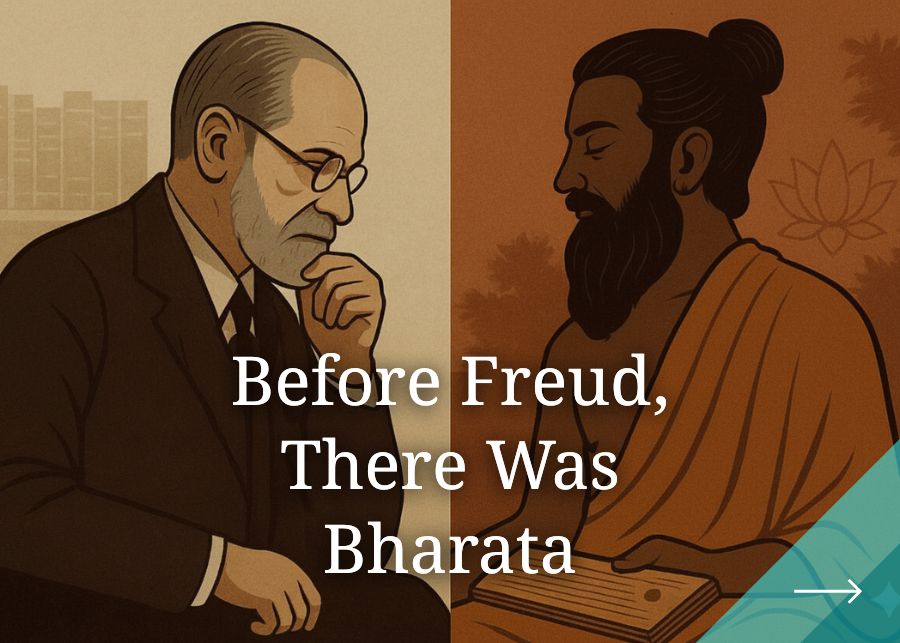
We all know Freud as the Father of Psychoanalysis.But did you know Bharata psychoanalysed his audience’s minds almost 20 centuries before Freud? We all know Freud as the Father of Psychoanalysis.But did you know Bharata psychoanalysed his audience’s minds almost 20 centuries before Freud? As Bharata himself says: “त्रैलोक्यास्यास्य सर्वस्य नाट्यं भावानुकीर्तनम् ॥” (NS 1.107)Natya is the re-expression or portrayal of the emotions found in the realm of the threefold world. Sounds heavy, doesn’t it? What he’s really saying is:Natya is nothing but a reflection of the world. Drama as Psychoanalysis One aspect of Natyashastra that I connect deeply with is Bharata’s rules for writing a drama. I say he “psychoanalysed” his audience long before psychology was even a term, because of the sheer depth of thought he put into explaining its impact. 👉 Isn’t that profound? Before reading Sanskrit dramas and writing ‘reference to contexts’ in our literature papers, I had never thought of this with such keen attention. And taking this thought a little further-don’t you think the movies and series we see now, have even more influential power, thanks to background music, visuals, cinematography, etc.? No wonder they influence us so strongly. We become what we consume-not just food, but also content.And Bharata realized this centuries ago. Rules to Protect the Audience Just as today we have a Censor Board, Bharata laid down clear dos and don’ts for playwrights. 1. No Negative Visuals He strictly forbids depicting any scenes that can cause a negative impact in the viewers’ minds-like killings, deaths, curses, etc.These can be narrated in the plot, but shouldn’t be shown on stage. Why? Because visuals leave a lasting impact, while narration leaves space for imagination. 2. The Protagonist Must Be Noble-and Survive Bharata was an advocate of happy endings. He clearly states that the protagonist should not die in the plot. Dramas should inspire the majority to try, not frighten them away. The Happy Ending Principle One major factor that shapes Bharata’s theory is that:All dramas are supposed to have happy endings. Why?Because people come to drama to relax, to disconnect, to learn, to feel uplifted.Real life already has enough struggle. Art must offer solace, hope, and faith in life. For Bharata, drama was not just entertainment. It was a tool to: educate, inspire, counsel, motivate, delight, and strengthen the society. To encourage people to believe in what seems impossible, to enkindle hope and reinforce faith. To convince them that everything happens for a reason, to boost their self-confidence, to help them forget their worries, and to believe in happiness.To inspire them to lead a worthwhile life and add value to the world. Bharata: The Original Psychoanalyst To me, Bharata wasn’t merely writing rules for playwrights. His vision was far beyond that. He was building strong mindsets through characters.He didn’t just understand individual thought processes-he contemplated the collective psyche of humankind. And he didn’t stop there; he laid the foundation to influence it profoundly through the beautiful medium of Natya. Perhaps we’ve praised Freud enough.Maybe it’s time we give Bharata his due-and apply his timeless principles to script happier, more meaningful lives of our own!

Before Freud, There Was Bharata… Read More »
Beyond the Arthashastra: Kautilya as a Teacher

Beyond the Arthashastra: Kautilya as a Teacher

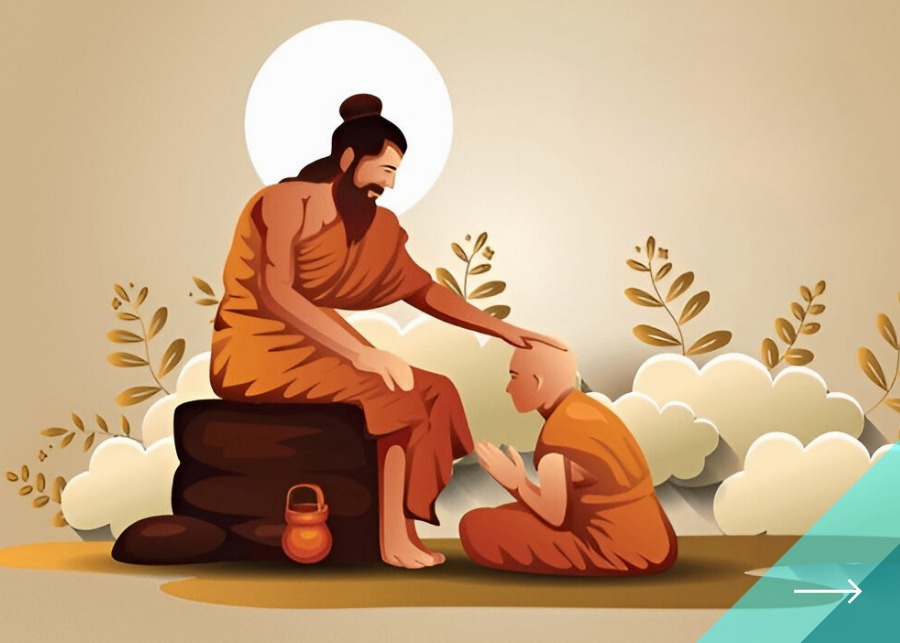
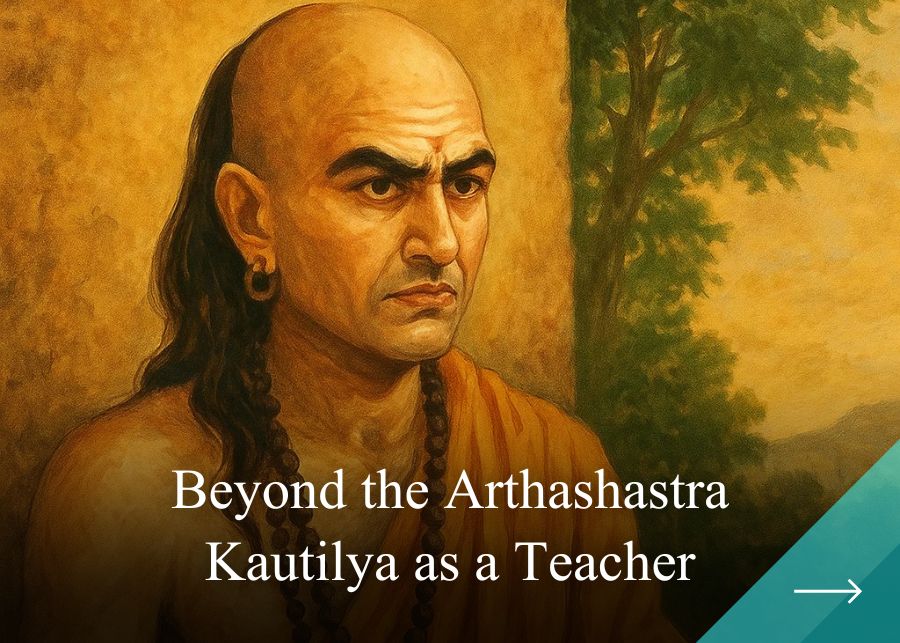
Beyond the Arthashastra: Kautilya as a Teacher Kautilya or Chanakya, the author of Arthashastra, is widely known as the diligent king-maker and eminent administrator of all times. Not just in Sanskrit literature, but in world history itself, he is recognized for his expertise in establishing the great Mauryan empire. Shrewd politics, intricate understanding of human nature, sharp sense of justice, and strategic planning are the attributes that Chanakya or Kautilya is well-known for. However, one amongst his many brilliant qualities is his dedication to his profession. And what was his profession? Minister? Strategic planner? Advisor? Well, if you look closely – being a teacher. The Visionary Teacher Behind the Mauryan Empire We all know the historic story of how Kautilya and Chandragupta overthrew the Nanda dynasty and established the Mauryan rule. Not just that, but later expanded the kingdom aggressively and powerfully, yet gracefully ruled it. This mighty duo was also well prepared to resist the attacks from Alexander. However, even after all these achievements, Kautilya chose to retreat to Takshashila and continue teaching there for the rest of his life – leaving behind the tons of wealth and status that he and his disciple had effortfully amassed. The true glory of a teacher shines through his students. And so does Kautilya’s. The evidently powerful and just rule of Chandragupta dictates the fact that Kautilya was not just insightful at strategy building but was also a futuristic and responsible teacher. Arthashastra as a Teacher’s Vision Not much of their personal stories are available, except for some references from classical literature, and the Arthashastra itself. Yet these are enough proofs of his greatness as a teacher. Arthashastra mirrors his vision, insight, and impeccable administrative teachings. Apart from these, it also highlights how he holds a king’s responsibility to serve the kingdom and welfare of the subjects in high regard. He very clearly lays down the training procedure of the king; and by that he means not just physical training and training in warfare and administration, but also training for being a responsible human being. I personally found this very intriguing. Training Beyond Knowledge Kautilya mentions chapters on what knowledge is to be studied by a king. But along with that, he also mentions chapters like Indriyajayaḥ and Vṛddhasaṃyogaḥ. Only learning the theories and shastras is not prescribed by Kautilya. He enjoins these learnings with the experiences of the wise from specific fields. This is just the tip of the iceberg. His teachings go far deeper. But this is the point where they begin – from the very roots of how the king should be developed as a person first and then a king. Writing the Arthashastra: A Teacher’s Risk Writing Arthashastra itself is the biggest sign of Kautilya being a teacher at the core. It mentions all possible ways to build a successful kingdom and deal with enemies. Thus, writing it down meant serving all the inside secrets to enemies and potential rivals on a platter. However, his deep belief in his teachings and confidence in the Mauryan kings’ capabilities left no room for hesitation before spilling these secrets to the world. Arthashastra quite literally acts as a manual to building an empire. And this is what Kautilya was interested in teaching – not just his immediate students, but people and generations to come. Kautilya’s Legacy as a Teacher His teachings empower not just kings but also any person in an authority or leadership position, however small or big. A king is someone who has the responsibility of more than just his life and livelihood. By this logic, Arthashastra principles apply to many: businesspersons, leaders, even householders, and so on. Thus, by compiling his teachings in Arthashastra, Kautilya has not just authored an intellectual treatise, but also paved the way for future generations to understand and take up the responsibility of leadership roles.

Beyond the Arthashastra: Kautilya as a Teacher Read More »

Dancers to Directors, Writers to Teachers – The Same Creative Pulse

Dancers to Directors, Writers to Teachers – The Same Creative Pulse

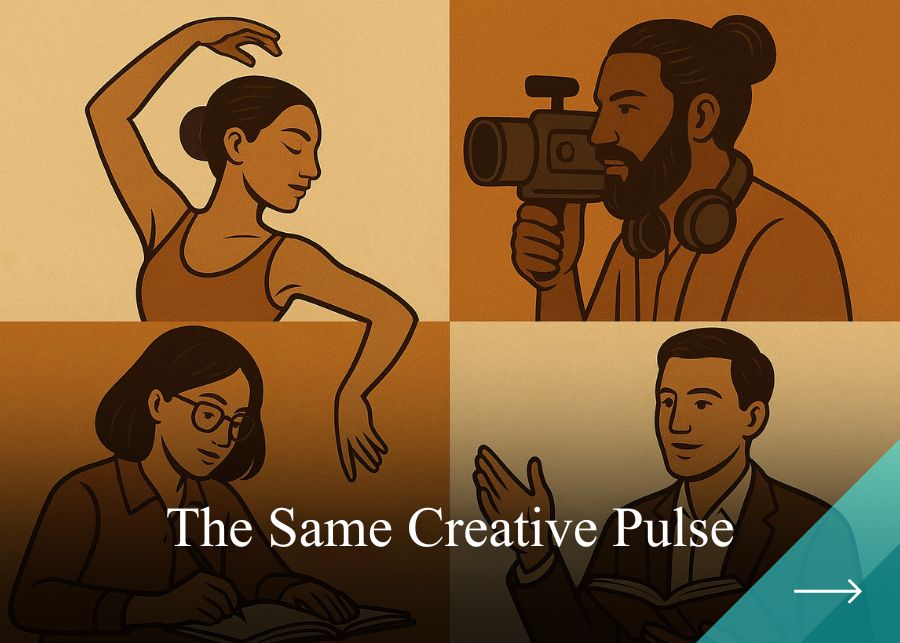
Being a Sanskrit student & teacher, I’m in a vicious habit of connecting everything around me with Sanskrit literature. I have been a dancer too, and a music and movie fan all along my life. Here’s what I found that connected all these seemingly different interests of mine! What Mammata Meant by काव्य? Mammata, a 14th Century Indian scholar of poetry and rhetorics, writes this in the opening lines of his text. Out of many other descriptions of poetry, Mammata describes it as ह्लादैकमयी. This stuck with me! He says, the काव्य is actually a parallel world created by the कवि. Now here’s the catch—we may translate काव्य as poetry, but it is a very limited view of it. If we see from Mammata’s lens, anything that creates a fictional reality in our minds is काव्य. Thus, any piece of literature would count as काव्य—stories, songs, dramas, movies, music too. As a dancer, dance too feels like poetry. Any performance, or let’s just widen the scope, any means through which we can teleport our audiences to a different space, can be called a काव्य. Why Even Sad or Scary Art Gives Joy The word ह्लादैकमयी literally means “that which gives only pleasure.” ह्लाद is pleasure, एक is only, and मयी is consisting of. Now think about it—Mammata isn’t saying that all काव्यs depict joyous things. He is saying that every काव्य, regardless of the emotion it conveys, ultimately leads to a feeling of delight in the audience’s mind. Do you remember reading a very touching story with a sad ending, but still loving it? Or maybe watching a horror movie that still gives you chills? Or seeing an aerial dance that left you awestruck? Or a painting depicting an angry Shiva ending the world with his rage? What was your reaction? Probably something like “Oh it was amazing, a must watch!” or “It was soo good!” None of these scenarios depict “happiness” in the literal sense. But as audience, what we feel is joy. Even if the character of the artform is crying or angry, happy or sad, what reaches us is pleasure. And that’s what Mammata explains. Art as Our Spiritual Journey काव्य has the beautiful potency of transporting its audience to a world that gives joy. Be it art, dance, music, literature or even just words—काव्य beautifully entertains, pleases, and educates the recipients. Anything performed with pure intention and full dedication reaches the hearts of the audience as happiness. And that’s what humans seek. According to philosophy, the highest goal of every human being is to attain the stage of summum bonum—the ultimate pleasure. Indian philosophy calls it सच्चिदानन्द. Happiness or आनन्द is what we seek in every bit of life. And art forms have the great capability of providing it. Maybe that’s why a Sanskrit verse says:साहित्यसङ्गीतकलाविहीनः साक्षात् पशुः पुच्छविषाणहीनः।A person disinterested in any form of art like literature, music or any other, is just as an animal without a tail and horns! Any art, sincere, soulful and earnest, will always connect to the heart of its audiences. And it’ll not just connect, but make its mark and stay there. It not only gives the bliss of creation to the creator, but also to the viewer or listener. Art may not give us the tangible goals we chase in today’s world like instant money, profits, luxuries. But it takes us a step ahead in our philosophical and spiritual journey—bettering us as human beings. My Takeaways from This!? As we established, काव्य is anything that holds the potency to transport the audience beyond reality. So, for me teaching too becomes a काव्य. It carries the same power that the speaker has: to use words and emotions in a way that carries the audience beyond their routine lives. To make them forget their problems and reality for a brief time, and travel with you on new paths. To take them to a place you want them to explore. Be it teaching kids or elders, beginners or experts, I genuinely believe that it isn’t knowledge or superiority of the teacher that makes teaching impactful; but whether they can make their students fall in love with the new reality that the new topic has to offer. In that sense, every act of true teaching is also art ह्लादैकमयी, filled with joy.

Dancers to Directors, Writers to Teachers – The Same Creative Pulse Read More »

Why I Teach Sanskrit in the Age of AI

What comes to your mind when you think of Sanskrit? Prayers? Shlokas? God? Mythology? Culture? Or maybe spirituality? Ramayana? Mahabharat? The Limited View of Sanskrit All this holds truth. All these are the jewels of Sanskrit literature. But defining Sanskrit with only this is like saying that an elephant means the trunk. The trunk is a part of the elephant. A definitive one, it’s the differentiator of course. But the elephant is not the same as trunk. This is a very limited definition. I strongly believe the same has happened with our perspective about Sanskrit. We associate Sanskrit with the only aspects of it that we are aware of. And make our limitation of knowledge, the limitation of Sanskrit. When we talk about Sanskrit today, we usually link it only to spirituality or some vague idea of connecting with our roots. Sanskrit literature does consist of beautiful and interesting mythological stories, enchanting prayers and amazing hacks into spirituality. But that’s just the trunk of the elephant. There’s more to it! A Civilization of Diversity Let’s travel back for a while, to the era when Sanskrit was being used widely. Can you recall the land where it was used? Yes, India. Back then it included the entire Indian subcontinent, extending up to the current Afghanistan and Himalayas in the North, and Indian ocean in the South. A geographically blessed territory, lying close by the equator. A land with maximum geographical variety. Nature here changes its attire at every mile, every season, every moment. A land with deserts but also the oceans, plateaus and plains, huge giant mountain ranges and the forests, with rivers and mines. All kinds of flora and fauna, minerals, gems, herbs. Rich cultivable land with a variety of soil. Vivid landscapes. Variety of animals, birds, insects, trees, herbs, shrubs, flowers, vegetables, fruits, and all possible natural aspects. As beautiful as this diversity is, it means adopting a diverse lifestyle too. Each variety poses a different risk and way of dealing. The more the forests, the more risk of attacks from animals and insects. Changing weather causing constantly changing environment. A different way of living in the deserts, different for forests, different for mountains, and yet different for snow lands. Each landscape requires an in-depth understanding of it, to live and flourish on it successfully. Same with the resources available. Indian land has a lot of resources available. However, availability isn’t the key, it is knowledge and innovation. The Birth of Disciplines The ancient people must have built houses, for safety from animals or weather. Maybe hay-houses at first, but those wouldn’t have survived in the winds and rains. So, then they must have learnt and re-learnt and refined their skill at building houses. That should be how they learnt the art of architecture. What if someone was bitten by a snake or an insect? Or someone fell sick due to the weather conditions? That’s how medicine came into picture. They used the available herbs and resources but soon their knowledge expanded. As is said, necessity is the mother of invention. Their knowledge of medicine developed to the peaks of intricate surgeries. This development in the field of medicine led to the development of many allied fields simultaneously. One such was chemistry or creation of surgical instruments. People not only created surgical instruments but also utensils for daily use, or weapons protection from animals or for wars. This branch can be termed as the modern name metallurgy. We also developed coins made of different metals. And similarly, jewellery, cosmetics and different kinds of garments were created. While all this was happening, the civilization was developing from a small group of wandering people to a well-established organized state. Thus, Administration evolved in multiple facets. Where there are people living together, there also exist human-made problems of different sorts. Thus, the law and order would have developed. Why Sanskrit Holds It All Basically, what I am trying to trace is that, just like any other society, the ancient Indian society also must have developed. Every society has multiple aspects to its development. And growth ensues all these aspects growing. Literature documents this growth. And that is why we study history to learn about how this development happened. Just like we are now documenting the developments, researches, and innovations of our era. Because the language widely understood by all is English, we use English for standard documentations. Sanskrit was used as the commercial language then, all the development of that span and area were documented in Sanskrit. So, isn’t it just logical to assume, that a language that has been a standard commercial language for such a long span, will have the literature dealing with all possible parts of the developing elements of a successful civilization? And that’s why I teach Sanskrit in the age of AI – not just to chant shlokas, but to rediscover the treasure of knowledge that once helped shape civilizations. In an age where AI can generate languages, code, and poetry, shouldn’t we also be reconnecting with the roots of human intellect through languages like Sanskrit? In a world where machines can think for us, languages like Sanskrit remind us what it truly means to think for ourselves. Maybe the future of intelligence isn’t just artificial – it’s also ancient.

Why I Teach Sanskrit in the Age of AI Read More »

Kshitija’s Journey with Sanskrit | Anveekshaa: A Modern Sanskrit Platform

My Journey with Sanskrit: From Law Aspirations to Anveekshaa Since childhood, I had always planned to pursue a career in law and become a lawyer. But life had other plans when Sanskrit was introduced to me as a subject in the 8th grade. While many find learning grammar rules and tables dry and tedious, I found myself fascinated by it. I excelled in Sanskrit in my school exams, and I knew it was something I wanted to pursue further. After completing my 12th grade, I was meant to embark on the path to an LLB, but I had a change of heart. Despite missing out on in-house college admissions, fate led me to the unexpected combination of Sanskrit, Psychology, and Philosophy. In a way, Sanskrit chose me—something I never planned for but grew to love. Though I completed my LLB later, my passion for Sanskrit only deepened. I pursued a post-graduate degree in Sanskrit through distant learning while working as an intern at a law firm. Over time, I found myself repeatedly choosing Sanskrit over law, not because it was easy, but because it resonated with me deeply. The logical decision was to follow what truly inspired me—Sanskrit. I’ve been privileged to have the freedom to shape my career and explore uncharted territories. While most people with a background in Sanskrit often choose stable teaching jobs, I decided to create something new—a platform that brings modern relevance to Sanskrit, ensuring that it is accessible to everyone, just like any other field. I am working to create new opportunities for future generations, outside the traditional teaching routes, by blending tradition with innovation. Anveekshaa was born from this vision. It’s my platform to modernize the professional world of Sanskrit while preserving its rich and elegant heritage. Through Anveekshaa, I strive to make Sanskrit approachable, relevant, and impactful for the modern world. My goal is not only to preserve the ancient wisdom of Sanskrit but also to provide new avenues for its professionals, from content creation to modern applications in various industries.

Kshitija’s Journey with Sanskrit | Anveekshaa: A Modern Sanskrit Platform Read More »